California’s 2020 legislative session came to an end Sept. 30 with several new bills signed into law that will impact water operations and the Department of Water Resources.
Published:

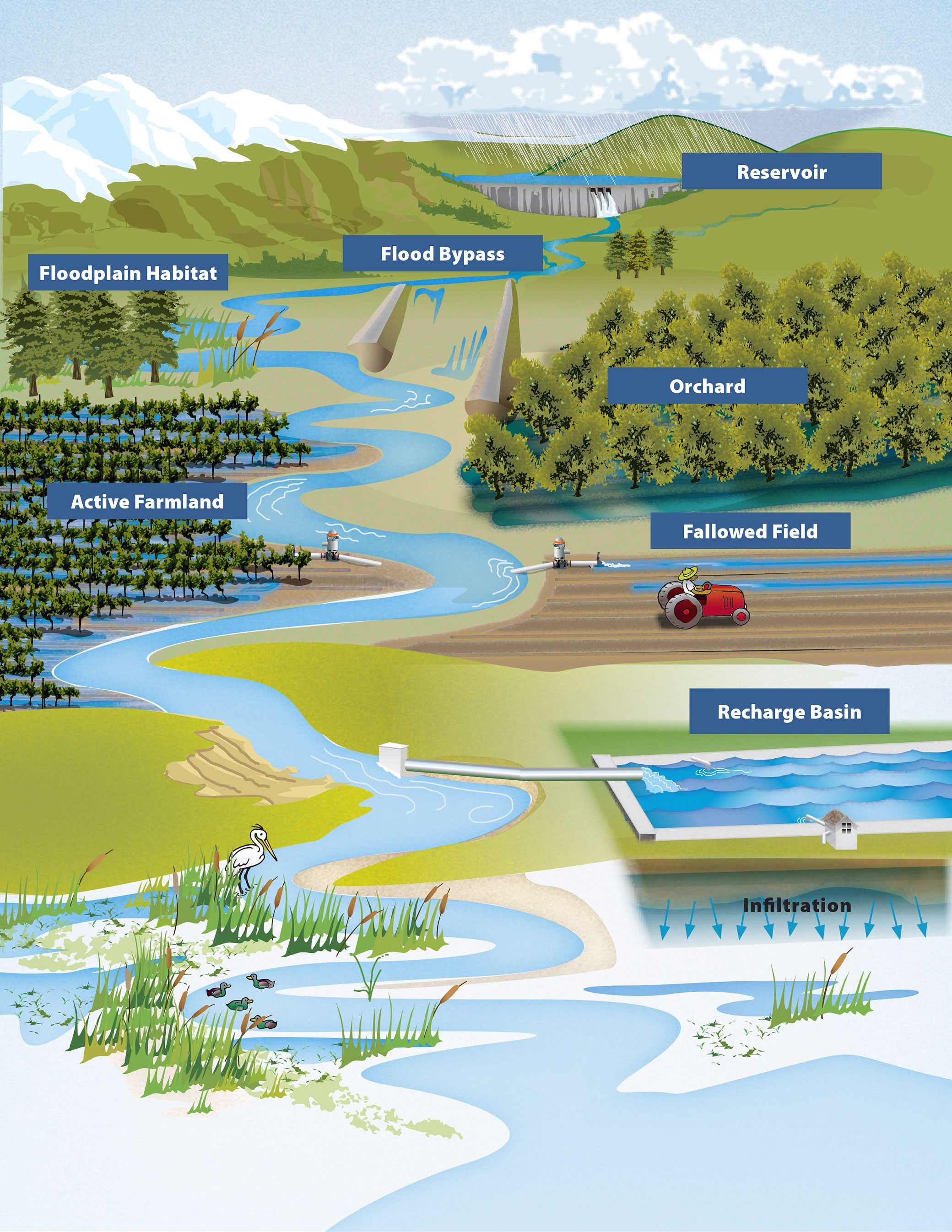
Flood-MAR is a water management strategy that redirects floodwater fromrainfall or snowmeltto agricultural lands, working landscapes, or managed natural lands including refuges, floodplains, and flood bypasses for groundwater recharge. Flood-MAR strategies can be implemented on a small-scale by individual landowners who divert floodwaterusing existing infrastructure or on a larger-scale through extensive detention/recharge areas and modernizing flood management infrastructure/operations.
Flood-MAR projects can provide broad benefits for Californians and the ecosystems of the state, including the following:water supply reliability, flood risk reduction,drought preparedness, aquifer replenishment, ecosystem enhancement, subsidence mitigation, water quality improvement, working landscapepreservation andstewardship,climate change adaptation, andrecreation and aesthetics.
As interest in Flood-MAR projects grows across the state, DWR is working with state, federal, Tribal, and local entities; academia; and landowners to build on existing knowledge, expand implementation, and strengthen Flood-MAR’s role in the state’s long-term water strategy.
Find answers to frequently asked questions about Flood-MAR in the FAQs.
DWR’s Watershed Studies explore two Flood-MAR strategies and examine how changing flood patterns, water supply, and ecosystem health can be jointly managed through coordinated recharge and reservoir operations. The Watershed Studies were conducted to see how they could help water managers reduce climate change risks and build resilience for communities, farms, and the environment.
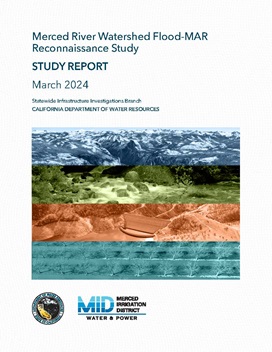
Merced River Watershed Flood-MAR Reconnaissance Study
To better understand climate vulnerabilities and how to address them, the California Department of Water Resources (DWR) conducted a three-year Merced study in partnership with Merced Irrigation District (MID) as a proof of concept to explore the effectiveness of Flood-MAR to concurrently reduce flood risk, improve water supply, and enhance ecosystems in the Merced River watershed, a tributary to the San Joaquin River. The Merced study is an exploratory watershed-scale analysis to develop and test analytical methods and models, assess climate change vulnerability, and evaluate adaptation strategies meeting multiple benefits that achieve these shared objectives:
Following is the Merced River Watershed Flood-MAR Reconnaissance Study Report and supporting technical information records (TIR) that explain the development as well as the results of the study:
 TheFlood-MAR Research and Data Development Plan (R&DD Plan) was created by a team of subject matter experts across 13 research themes who identified the research, data, guidance, and tools necessary to support and expand the implementation Flood-MAR projects. There has been a lot of progress since the plan was developed, and an evaluation outlines the advances made on its 39 key actions while also pointing to dozens of resources created to support broader use of Flood-MAR.
Theme-specific Actions and Documentation are available by request to FloodMAR@water.ca.gov.
Coordinating Flood and Groundwater Management Brochure
Learn more about how Flood-MAR can reduce flood risk, boost groundwater recharge, and support climate adaptation by strengthening coordination between flood and groundwater management.
Explore how large-scale Flood-MAR implementation can help rehabilitate and modernize California’s water and flood infrastructure.
The following websites provide additional information and resources on the benefits and issues of using flood waters to recharge groundwater basins.
California’s 2020 legislative session came to an end Sept. 30 with several new bills signed into law that will impact water operations and the Department of Water Resources.

Preparing for a flood disaster starts at home. Disasters can happen everywhere, and every member of the family should be part of the planning, including young children and teens.
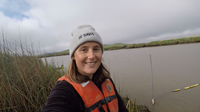
We sat down with Hailey Wright, a Department of Water Resources (DWR) environmental scientist, to discuss the salmon lifecycle and her work designing and implementing projects in the Yolo Bypass to improve habitat and fish passage for native salmonids and sturgeon.

California has the most variable weather conditions in the United States, often varying between extremes such as drought and flood. Our ability to forecast variable weather conditions well in advance is a driving factor in how water managers maximize the benefits and minimize the hazards of each storm.
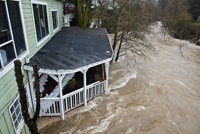
Flooding is a major issue across California – every county has experienced a federally declared flood disaster in the past 20 years. To help Californians stay prepared this flood season, DWR is participating in the eighth annual California Flood Preparedness Week from October 19 – 26, 2019.
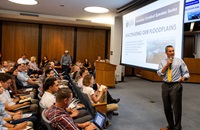
At his inaugural Speaker Series on July 15, California Secretary for Natural Resources Wade Crowfoot led a discussion on restoring local wildlife species and habitats by reactivating floodplains.
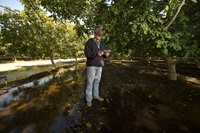
DWR requests review and comment from interested parties for the draft Flood-MAR Research and Data Development Framework. The comment period will be open until Thursday, September 20.
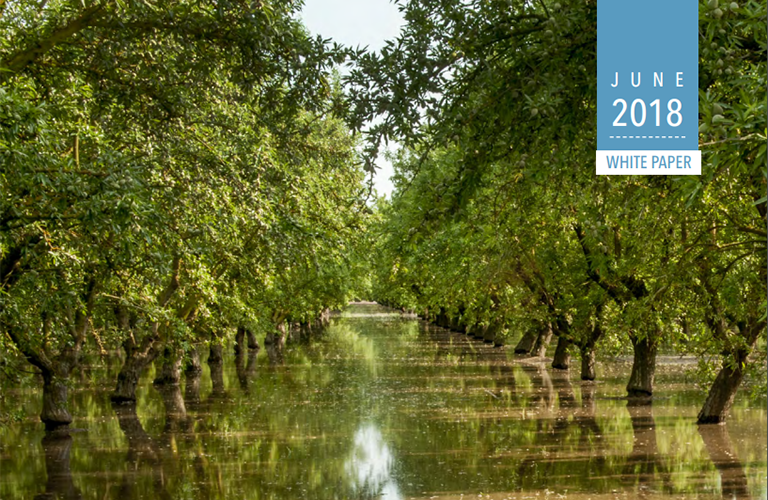
DWR recognizes the need to rehabilitate and modernize water and flood infrastructure in California. Floodwater for Managed Aquifer Recharge, or Flood-MAR, is an emerging water management strategy that can significantly improve water resources sustainability throughout the state.
DWR is pleased to announce a 15-day public comment period for the Statewide Flood Emergency Response Grant Program Round 3, Draft List of Awards.