
A drone view of California Department of Water Resources’s Sustainable Groundwater Management Office installing new equipment to enhance the monitoring and understanding of land subsidence in California. The newly installed GPS station and remote sensing calibration equipment will be firmly anchored into the ground to ensure precise positioning and detect vertical movement of the Earth’s surface. Photo taken January 16, 2025.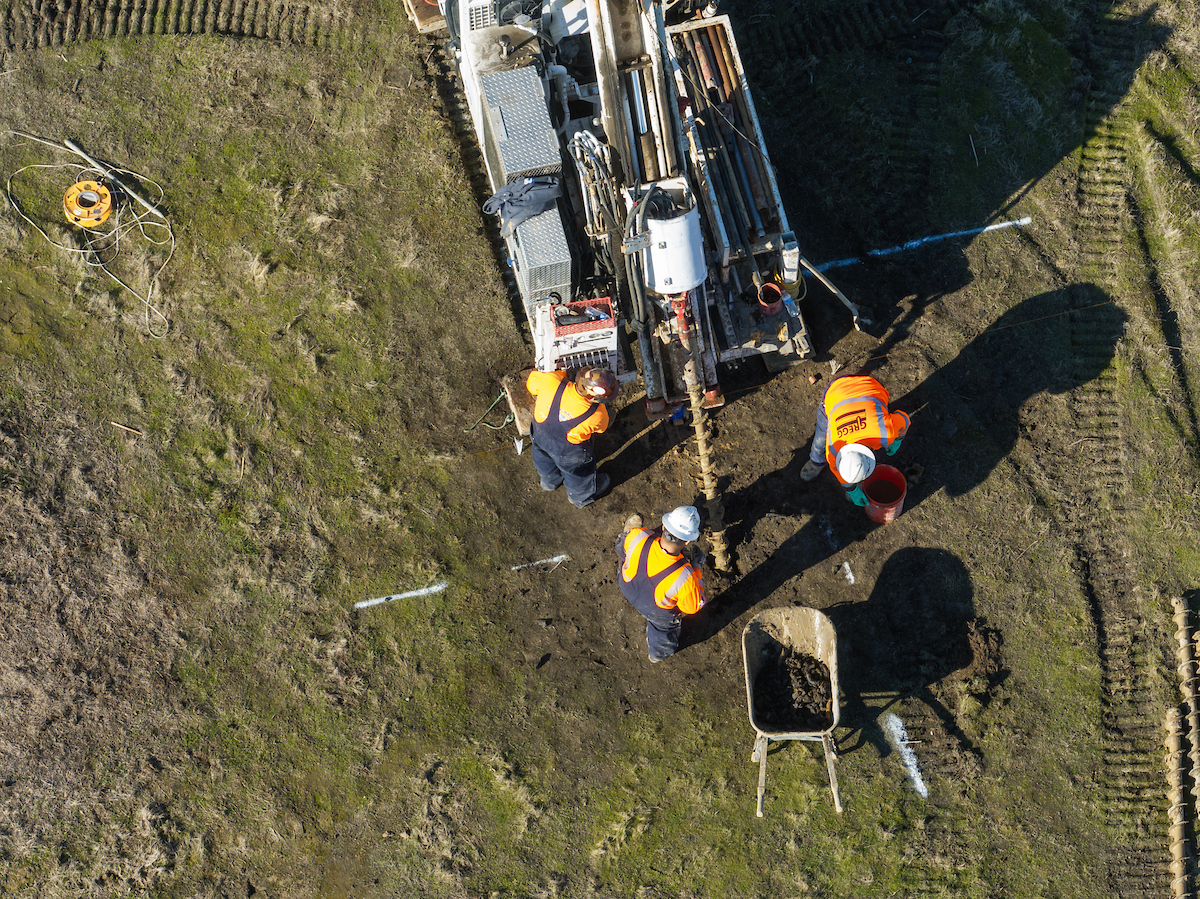
California’s continued partnership with locals will serve as the key to safeguarding groundwater-reliant communities and infrastructure from land sinking
SACRAMENTO, Calif. – Local groundwater agencies are getting a new resource to add to their water management toolkit – the Best Management Practices for Land Subsidence document newly released by the California Department of Water Resources (DWR). Finalized after months of development and a robust public review process, the document will serve as a guide for groundwater managers on the basics of subsidence, how to best manage it, and available technical assistance.
Subsidence, or the sinking of land, is caused by various factors including excessive groundwater pumping. It is a long-standing water challenge in California and has caused permanent damage to canals, pipelines, roads, and homes across the state. In 2025, DWR released two reports concluding that subsidence has restricted the amount of water delivered to communities through California’s primary water storage and delivery systems – the State Water Project and the federal Central Valley Project. The reports also cite that the impacts under California’s changing climate are expected to increase if excessive groundwater pumping continues, underlining the need for state and local officials to work together to protect the infrastructure that millions of Californians depend on for a reliable water supply.
“The effects of subsidence are reducing water supply reliability, jeopardizing public safety, and costing Californians hundreds of millions of dollars annually in damage repairs,” said Paul Gosselin, DWR Deputy Director of Sustainable Water Management. “History shows that California’s local groundwater agencies have done a great job implementing strategies from previous best management practices released from the Department and we look forward to achieving the same outcome when it comes to subsidence.”
How Subsidence is Impacting Californians
Today’s document helps meet objectives set by the Sustainable Groundwater Management Act (SGMA) to avoid or minimize current and future impacts of subsidence. Subsidence has been recorded in California for over 100 years, and its impacts vary across the state. The types of infrastructure that have been damaged as a result of subsidence or are at risk include water conveyance, flood control systems, roads, bridges, utilities, and groundwater wells. Despite some successful mitigation in certain areas, subsidence of 1 to 5 feet or more has been recorded in the Sacramento Valley and primarily the San Joaquin Valley over the past decade. If no action is taken to address subsidence, communities and statewide infrastructure will continue to be at risk.
In addition to today's release, DWR is actively exploring other methods to further understand and respond to subsidence. These efforts include installing several subsidence monitoring stations throughout the state to track sinking in the San Joaquin Valley and areas of Northern California, as well as expanding California’s data collection through a new satellite launched by NASA and the Indian Space Research Organisation in 2025. The new data collected, combined with historical data that DWR currently uses, will help water managers and decision makers make better-informed decisions by detecting any shifts caused by subsidence that could impact key infrastructure and jeopardize public safety.
Close management of California’s groundwater resources and subsidence is needed more than ever to protect water infrastructure that communities rely on now and in the future as we adapt to the ongoing challenges caused by climate change and extreme weather events. DWR will continue to deliver the latest data, tools, and assistance to ensure that local agencies have the knowledge and resources to manage their groundwater basins for long-term sustainability.
For more information:
- Sustainable Groundwater Management Act (SGMA) webpage
- What is Subsidence and How Does it Impact the Ground Beneath Our Feet
- Subsidence webpage
- Impacts of Land Subsidence Fact Sheet
Contact:
Allison Armstrong, Information Officer, Department of Water Resources