
State Water Project Shifts Into Summer Operations to Support California’s Water Supply and Environment
A drone view of The Ronald B. Robie Thermalito Pumping-Generating plant produces electricity by transferring water from the Thermalito Forebay to the Thermalito Afterbay through four generating units. This State Water Project facility is located in Butte County downstream from Oroville Dam.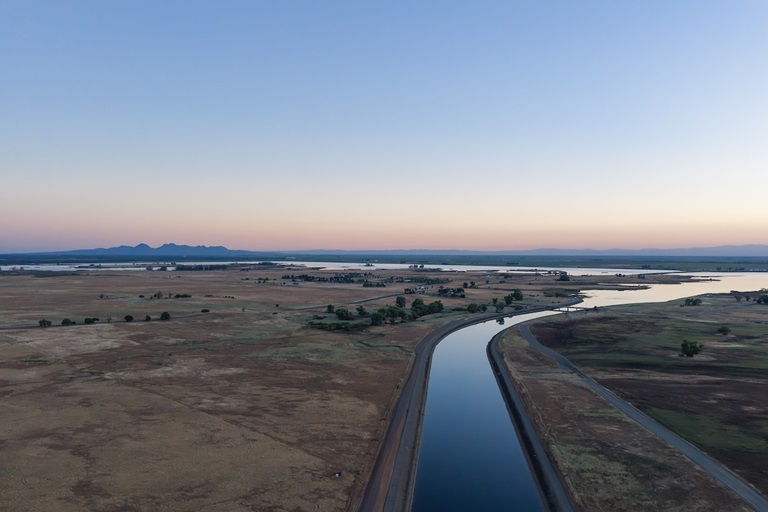
The people who operate the State Water Project move water within a realm of regulations designed to protect water quality and endangered fish species under various conditions throughout the year. Starting July 1, those regulations make a big shift.
This annual change in regulations is driven primarily by what scientists know about the life cycles and movements of native fish species that include Delta smelt, longfin smelt, steelhead, and Chinook salmon. At the onset of summer, around July 1, these threatened and endangered species generally have moved well beyond the south Delta channels that are influenced by the pumping of the State Water Project (SWP). Starting July 1, state and federal regulations allow the SWP to capture and move water supply at a faster rate than February through June, when native fish species are spawning or migrating through the Delta and could be harmed by SWP pumping.
In anticipation of the onset of summer regulations, the California Department of Water Resources (DWR), which operates the SWP, started releasing more water from Lake Oroville, 150 miles upstream of the Delta. Pumping in the Delta is expected to increase from 1,000 cubic feet per second (cfs) on June 30 to about 6,500 cfs by July 5. The pumped water will either flow 70 miles south into storage at San Luis Reservoir, to be used later by Santa Clara Valley, San Joaquin Valley and southern and coastal water districts, or it will flow directly to these water districts to meet their immediate needs. In all, the SWP meets some or all of the water needs of 27 million Californians.
Also starting July 1, DWR began operating a series of gates on Montezuma Slough in the western Delta in order to allow more freshwater into the Suisun Marsh, a large, brackish wetland created where the Sacramento and San Joaquin rivers empty into San Francisco Bay. The marsh provides many species of birds and fish with food and safety from predators. Federal and state wildlife-protection regulations require DWR to operate the salinity control gates for 60 days starting July 1 in order to create a zone of potential habitat with the level of salinity scientists believe endangered Delta smelt prefer.
But operating the gates on Montezuma Slough to freshen Suisun Marsh increases salinity in western Delta channels outside the marsh. To counteract those higher salt levels, DWR will increase freshwater releases from Lake Oroville. By adjusting Oroville flows and Delta pumping rates, DWR seeks to maintain Delta salinity levels within the bounds set by the State Water Resources Control Board. Those standards are designed to protect farmers growing crops in the western Delta and other uses of water.
This summer shift in SWP operations is tied to the calendar. But increasingly, DWR’s regulatory permits create opportunities for operational changes based on real-time conditions.
For example, late last year a 2025 amendment to DWR’s California Endangered Species Act permit created an opportunity for operational changes based on real-time conditions. By tracking the presence of fish species in real time and foregoing some flow actions in the fall, the SWP was able to increase flows – and environmental benefits – in the winter. This adjustment proved valuable both ecologically and for water supply.
Under the amendment, the SWP contributed an estimated additional 210,000 acre-feet of Delta outflow in January. This boost to flows helped move fish westward and away from high-risk areas in the path of pumping facilities.
These conditions also allowed for more sustained water exports. For much of the season, the SWP was able to capture water supply at a fairly steady pace without many impacts to listed fish species at the south Delta pumping plant. In fact, the number of listed species taken at the pumps was at almost a 10-year low.
Water managers take seriously their mission to balance the water needs of millions of people while protecting fish species and the environment. By adjusting operations and the regulations behind them, California can continue to adapt to a changing climate to the benefit of all.