
Hidden From View, Vernal Pools Host a Dazzling Display of Diversity
Vernal pools at the Illa M. Collin Conservation Preserve in Sacramento County. Photo taken April 10, 2026.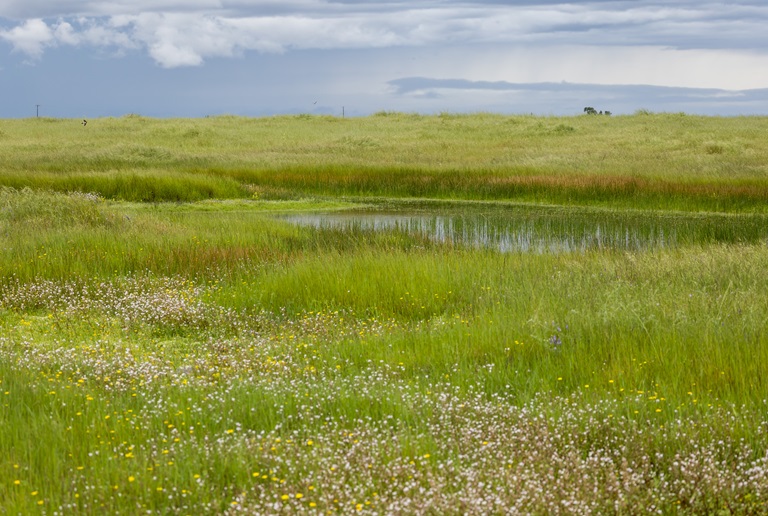
Vernal pools don’t immediately catch the eye’s attention. They're stealthy and scattered across rolling grasslands – hidden beneath layers of vegetation. Appearing seasonally during the cooler months, vernal pools are temporary shallow wetlands that hold water in winter and spring until they dry in the summer heat. A keen eye for these isolated gems is rewarded with an amazing slice of biodiversity, bursting with color.
On a recent spring morning, under leaden skies, DWR Senior Environmental Scientist Clay DeLong offered a glimpse of vernal pool habitat at Mather Regional Park in southeast Sacramento County, an area he deemed a “unique grasslands system.”
A botanist with more than a decade of experience working in and around vernal pools in Central and Northern California, DeLong is a fervent advocate of their unique nature and value to the ecosystem.
“Because of the biodiversity and their relative scarcity, vernal pools are also home to a wide variety of rare endemic plants and animals, many of which are special status species of regulatory significance to many of DWR’s projects,” he said.
That is why DWR is dedicated to sustaining and preserving vernal pools for future generations and does so through its conservation easements in the vicinity of Lake Oroville.
Ranging in size from small puddles to shallow seasonal lakes, vernal pools appear in relatively flat or gently sloping grasslands in more than 30 counties across 17 distinct regions in California. They are sometimes connected by small drainage conduits called swales and can form large, interconnected complexes.
Before large-scale settlement by European Americans in the 18th and 19th centuries, seasonal wetlands blanketed vast stretches of California, with more than 6,000 square miles of vernal pool landscape. Agricultural development and urban sprawl reduced vernal pool acreage by as much as 95%, depending on the location.
DeLong views vernal pools through the lens of a botanist. “The main reason vernal pools are embedded in the collective consciousness of the California public is the flowers,” he said. “Vernal pools, especially those in relatively undisturbed landscapes, can have incredible displays of wildflowers in the spring.”
Those wildflowers are spun from the pockets of water that bring the landscape to life. Plants, insects, amphibians, reptiles, birds, and mammals all thrive within the relatively contained ecosystem while the isolated nature of vernal pools shields them from the scourge of invasive species. “As a result of that lack of adaptation to those conditions, it's not uncommon for vernal pools to be largely dominated by native vernal pool endemic plant species.” DeLong said.
Although far fewer in number, the remaining vernal pools evoke California’s natural legacy and stand as sparkling examples of nature persisting within the urban landscape.
Photos of vernal pools at Mather Regional Park can be found at DWR’s Pixel gallery.