
DRIP Collaborative’s Third Year Centers on Ecosystems, Land Use Planning, and Water Infrastructure
A north-facing drone view of the California Aqueduct near Crows Landing, located in Stanislaus County. Photo taken March 9, 2026.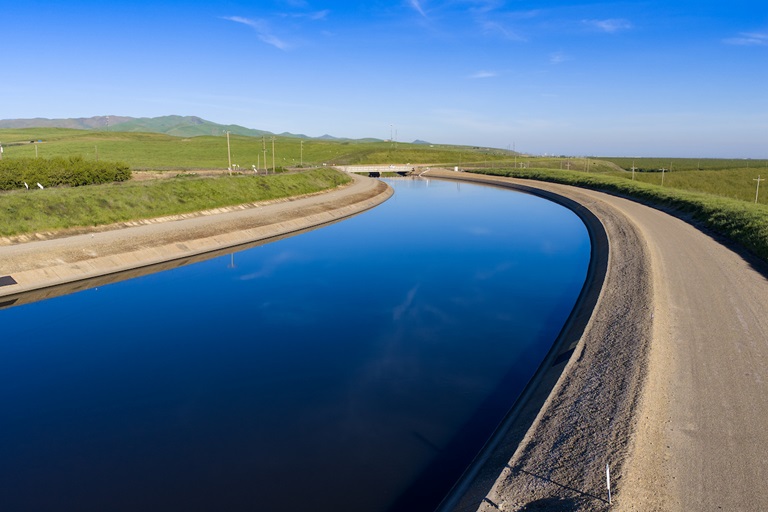
California’s climate is defined by extremes, and water year 2025 put that reality on full display. One month delivered warm, dry conditions that can typically stress water supplies; the next brought a surge of winter storms, only for January to swing dry again. These whiplash shifts aren’t outliers — they are becoming the new operating conditions for water managers, communities, and ecosystems across the state.
Against this backdrop, the Drought Resilience Interagency and Partners (DRIP) Collaborative continued its work to strengthen coordinated drought planning. The Collaborative convenes state agencies, Tribes, local governments, public water systems, community-based organizations, technical assistance providers, land use and water experts, environmental and agricultural interests, and members of the public to strengthen coordinated drought preparedness. Released in March, DRIP Collaborative’s 2025 Annual Report highlights the activities, discussions, and recommendations developed during the task force’s third year.
In 2025, the DRIP Collaborative focused on three main areas: reducing ecosystem impacts of drought, land use planning for drought resiliency, and water infrastructure and planning. The report also describes a set of “cross-cutting” or shared themes that apply across all focus areas to help guide the DRIP Collaborative’s discussions and identify challenges and recommendations. The report further summarizes continued communication efforts, progress on prior recommendations, and priorities for the year ahead.
Supporting Healthy Ecosystems
Discussions during 2025 emphasized that ecological health is closely linked to drought resilience for communities, water supplies, and biodiversity. Members examined voluntary, cooperative ways for partnering agencies to keep water flowing in streams during dry periods. This work led to the development of Instream Flows: Best Practices for Landowner Cooperative Solutions, which recommends developing guidance to help landowners, Tribes, agencies, and local partners work together through voluntary, cooperative agreements that support instream flows during drought.
Connecting Land Use and Water Planning
The land use planning focus area examined how land use decisions strongly influence local water demand and drought risk. The annual report highlights two recommendations; Aligning Communication and Planning Timelines for Housing and Water and Assessing Water Supply and Wastewater Capacity with Housing Needs, which seek to improve the timing and coordination of housing and water planning and assessing whether existing water and wastewater systems can support future housing needs. These efforts would be guided by neutral academic or research institutions, working in coordination with state and local partners.
Learning About Water Infrastructure Challenges
The Collaborative’s discussions on water infrastructure and planning centered on how water infrastructure conditions affect drought preparedness at regional and local levels. Members distinguished between long-term “backbone” infrastructure needs and immediate gaps that can limit a community’s ability to respond during dry periods. Rather than developing recommendations, discussions emphasized shared learning, improving system flexibility, supporting groundwater recharge, and understanding challenges that small and rural communities face.
Alongside these focus areas, the Collaborative used cross-cutting themes to guide discussions in 2025. These themes helped members look at challenges and solutions in a consistent way across all focus areas. Themes included climate change adaptation, nature-based solutions, and prioritizing equity for communities most affected by drought. Members also emphasized the importance of clearer, coordinated communication that frames drought as a long-term condition requiring ongoing preparation.
Looking Ahead
In 2026, the DRIP Collaborative will focus on two topics. First, it will revisit roles and responsibilities for responding to dry domestic wells, building on its 2024 work to clarify how state, county, and community partners coordinate during drought-related well outages. The goal is to identify gaps in current response pathways and explore ways that support more timely, consistent, and community-centered assistance.
Second, the Collaborative will advance its 2024 recommendation on drought indicators and metrics, which calls for developing a shared, transparent statewide framework for understanding drought conditions and impacts. Discussions will emphasize refining user needs, improving data coordination, and supporting broader use of drought indicators.
As California continues to navigate highly variable conditions, continued coordination and planning remain essential. The DRIP Collaborative provides an ongoing forum to share perspectives and strengthen statewide drought preparedness. To stay up to date on the DRIP Collaborative’s activities, and to read the full 2025 report, visit water.ca.gov/drip or join the email subscription list.